



Authored Books
Why I Write
I’ve written four books, and they all ask the same question from different angles: what does it actually take to build a sustainable career as an independent revenue leader?
The Fractional Trap names the market shift that’s squeezing specialists who thought the 2020-2023 playbook would last. The Fractional Operator strips away the fantasy and describes what executive-level work really feels like without institutional scaffolding. The Fractional Practice is the design manual—how to structure a practice that doesn’t slowly collapse into a fragile job you can’t exit. And Chief Revenue Architect points to what comes next: the role that sits above execution, designs the systems AI runs on, and governs how revenue actually flows.
Together, they trace a path: from wanting to go fractional, to understanding what you’re walking into, to building something that holds up, to evolving into the role the market is starting to need. I wrote them because no one was telling the truth about this work—and the people doing it deserved an accurate map.
The Fractional Trap
Why Revenue Specialists Are Losing Ground, and How To Build a Career That Lasts.
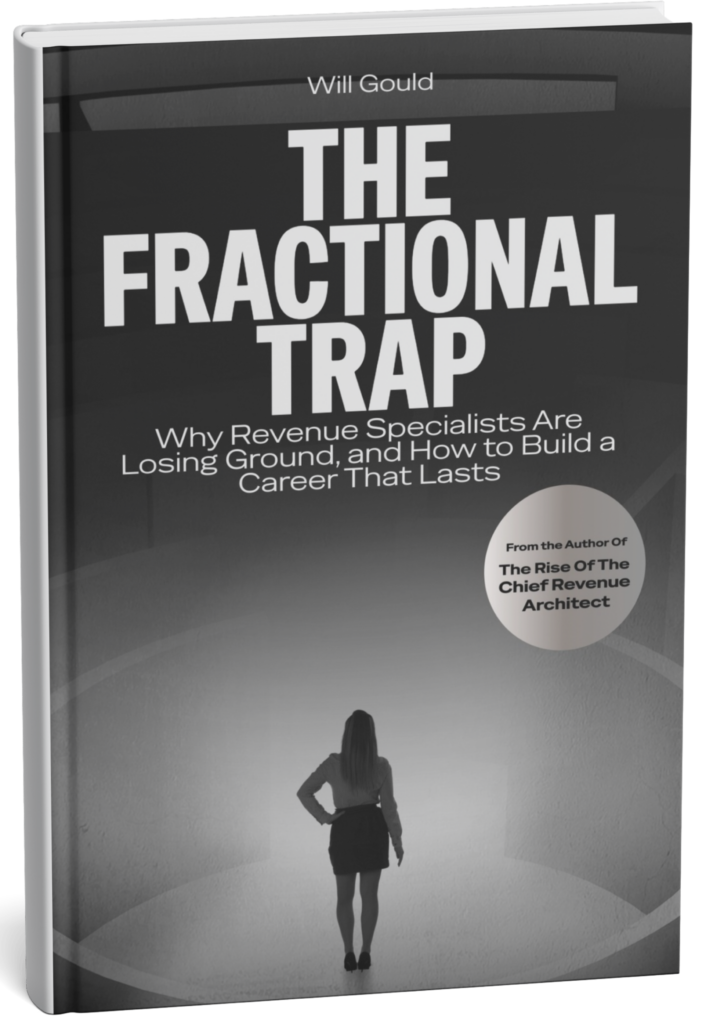
The playbook is broken.
Between 2020 and 2023, experienced marketing and revenue executives discovered they could go fractional and thrive. The demand was real. The rates were strong. Fractional CMO, Fractional CRO, Fractional RevOps Leader became the smart move after a layoff or a moment of career reflection.
That window is closing.
AI tools now generate campaign strategies, score leads, write content, and forecast pipelines. Not perfectly—but adequately. Adequately enough that companies are doing new math: three fractional specialists at $10,000-$15,000 per month each, or one junior operator with a $1,000 AI stack?
For many buyers, the answer has changed.
The fractional specialists who built thriving practices are watching their rates compress, their pipelines slow, and their discovery calls turn defensive. They’re working harder than ever and falling behind anyway. Not because they failed—because the role they’re selling is being squeezed from both sides.
This is the fractional trap. And if you’re an experienced revenue leader who went independent, you’re probably already feeling it.
This book explains what’s actually happening—and what to do about it.
The Fractional Operator
Operating at The Executive Level Without A Safety Net
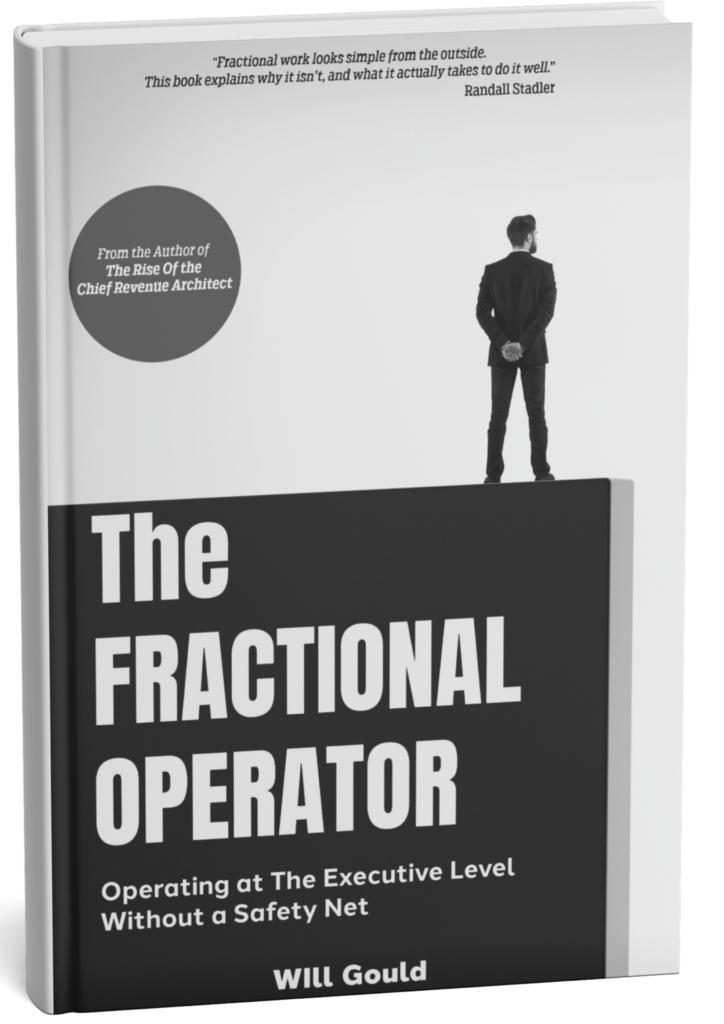
Fractional leadership isn’t broken.
But the fantasy around it is.
The Fractional Operator is a clear-eyed field guide to what it actually means to operate at the executive level without the institutional scaffolding that makes executive work possible.
Fractional CMOs, CROs, CEOs, and operators are expected to deliver senior-level outcomes—strategy, judgment, leadership—without teams, authority, brand cover, or long-term security. The result is a role that looks flexible from the outside and feels structurally unstable from the inside.
This book names that reality directly.
Not as a warning.
Not as a complaint.
But as an operating manual for people who intend to last.
It’s a book for people who already are one, or are about to be, and want an accurate map of the terrain before the ground shifts under them.
There are no templates.
No hacks.
No hype.
Just a sober, practical account of the work as it actually exists, and how to build a practice that works with reality instead of fighting it.
If you’re looking for reassurance, this isn’t the book.
If you’re looking for clarity, it is.
The Fractional Practice:
How to Design, Run, and Exit an Expertise-Based Business
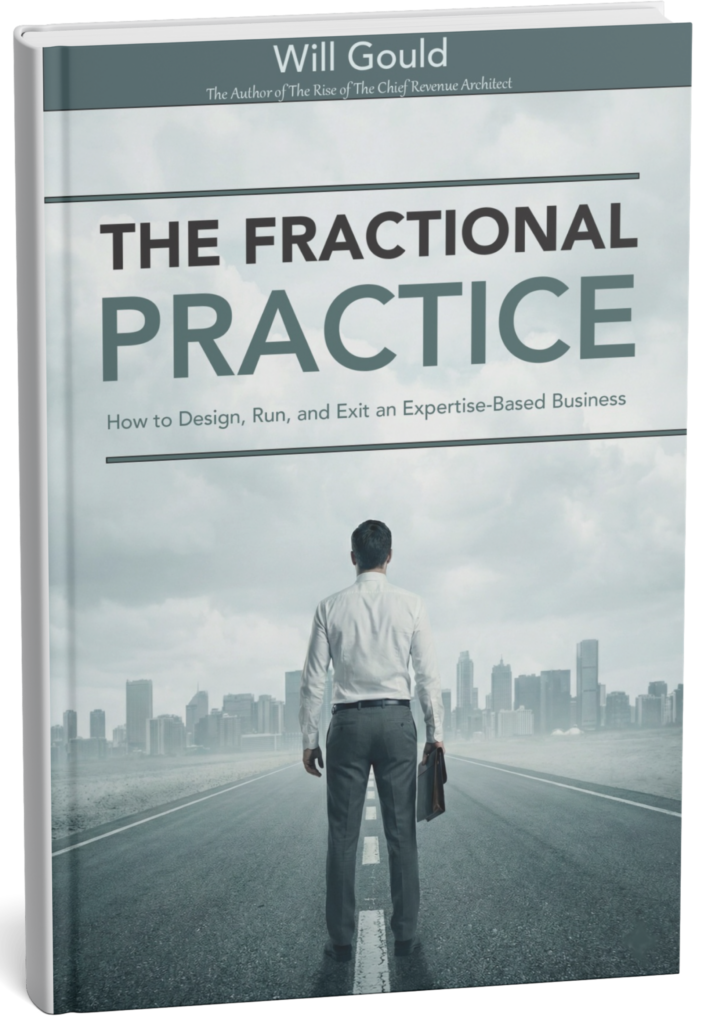
You’re good at what you do. That’s not the problem.
You’ve built real expertise. You’ve owned outcomes. You’ve sat in rooms where decisions mattered and watched organizations pay, sometimes dearly, for judgment they didn’t fully understand how to use. People trusted you when things were complex, political, or on the verge of breaking.
Now you’re considering fractional work. Not consulting in the traditional sense. Not stepping into another full-time role. Something in between, embedded, ongoing, senior, but independent. On paper, it looks like freedom. In practice, it’s a structural shift most people underestimate.
Here’s the uncomfortable truth: most fractional practices don’t fail because the practitioner lacks skill. They fail because the practice itself was never designed. Pricing fights positioning. Engagements drift. Authority erodes. Clients start directing instead of listening. The work expands, the boundaries blur, and what looked like autonomy slowly turns into a fragile, exhausting job you can’t quite exit.
The Rise Of The Chief Revenue Architect:
Sales, Marketing, and RevOps Leadership Roles Are Disappearing. Step Into the Role AI Still Needs Humans to Lead.
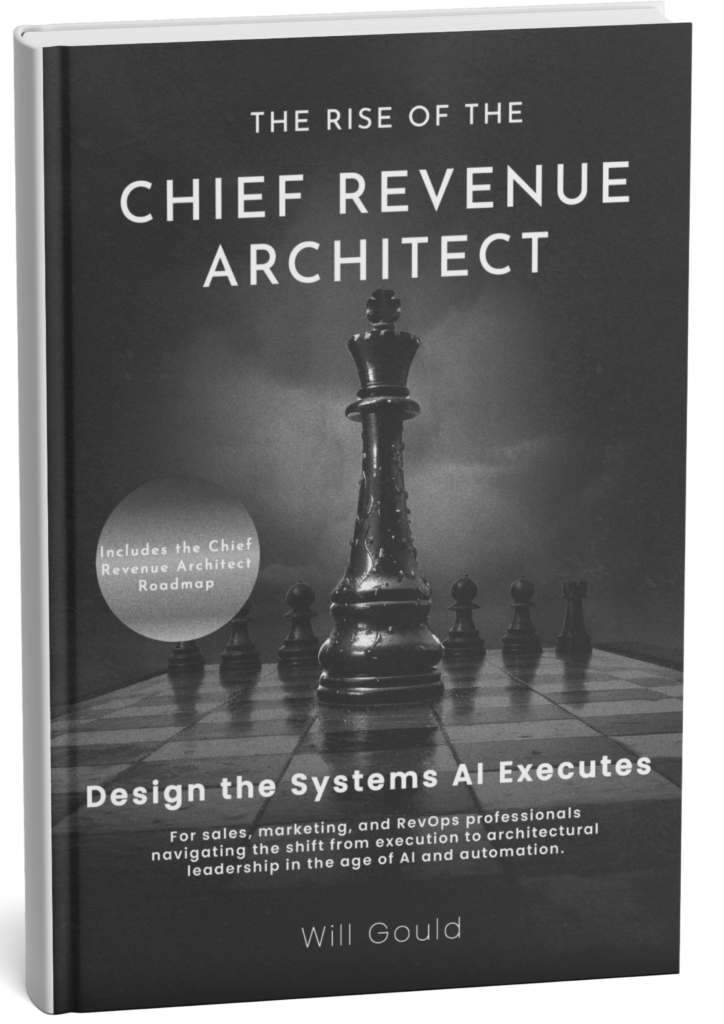
Your execution skills are being automated. Your optimization expertise is becoming table stakes for software. The role you trained for is shrinking—and you’re not imagining it.
AI and automation aren’t coming for revenue operations. They’re already here. Workflows that defined your career are being absorbed into systems. The funnel you’ve optimized for years no longer reflects how buyers actually behave. And the leadership team is starting to wonder what they’re paying humans to do.
But here’s what no one is telling you: the companies navigating this shift need a new role. Not another operator. An architect. Someone who designs the systems AI executes. Someone who governs how revenue actually flows.
That role has a name: Chief Revenue Architect.
Chief Revenue Architect is the definitive guide for sales, marketing, and RevOps professionals who feel the ground shifting beneath them. It explains why execution work is collapsing, what’s replacing it, and exactly how to reposition yourself before the window closes.